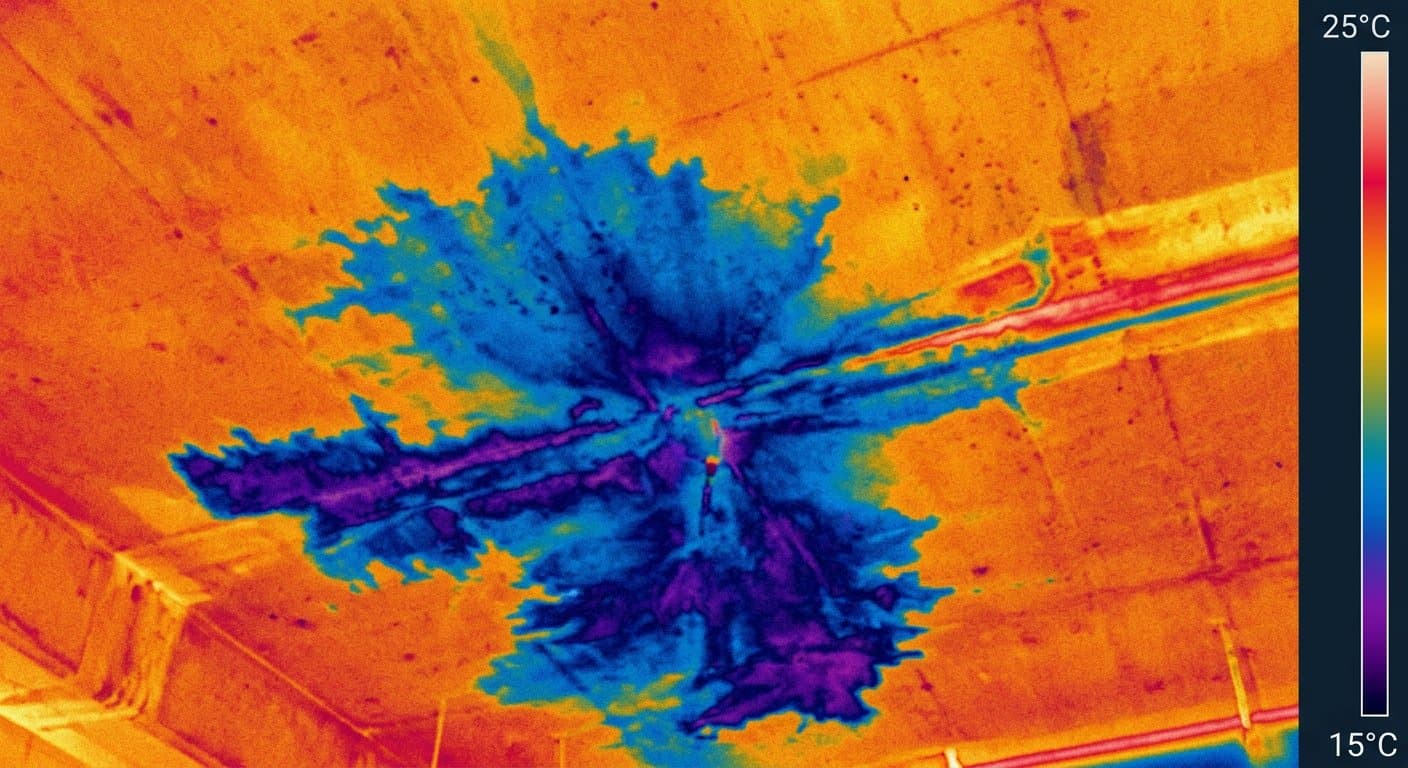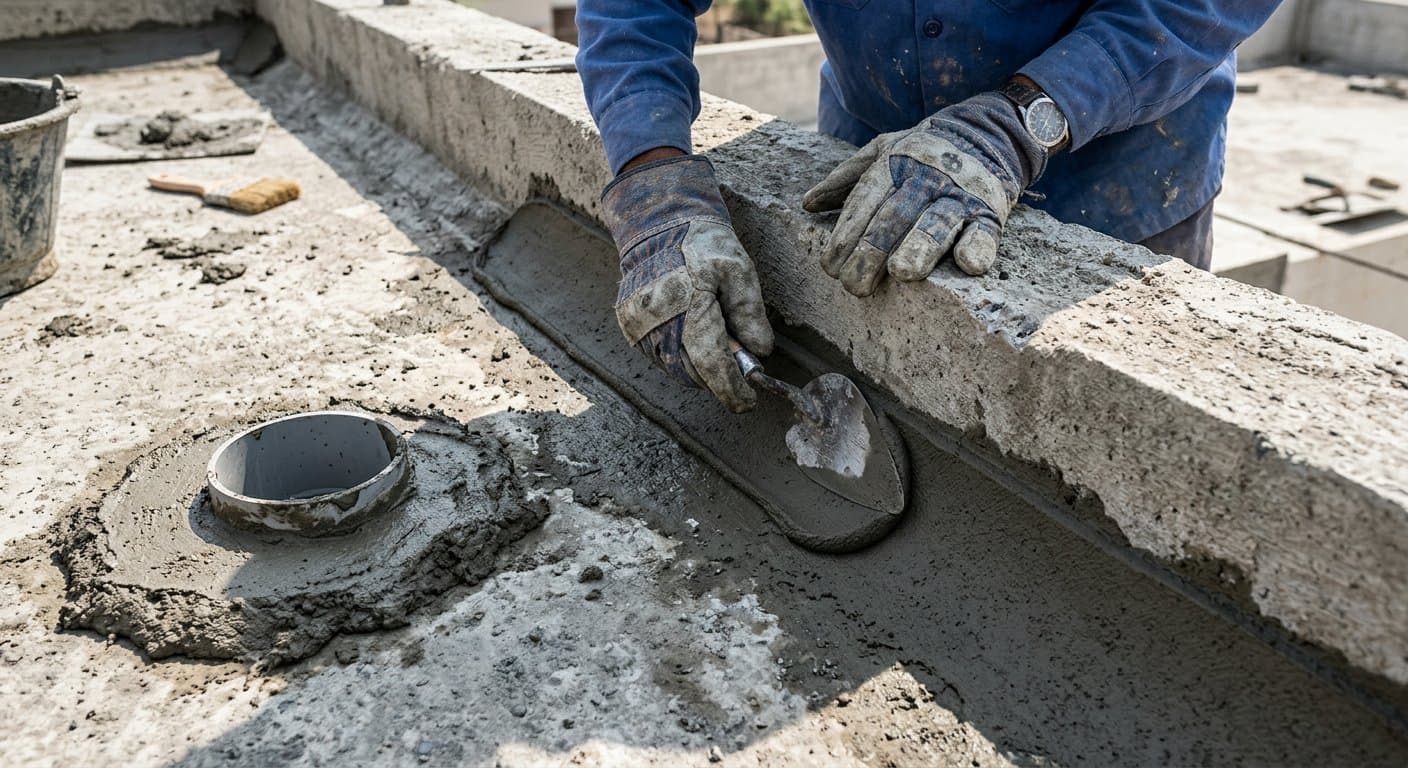
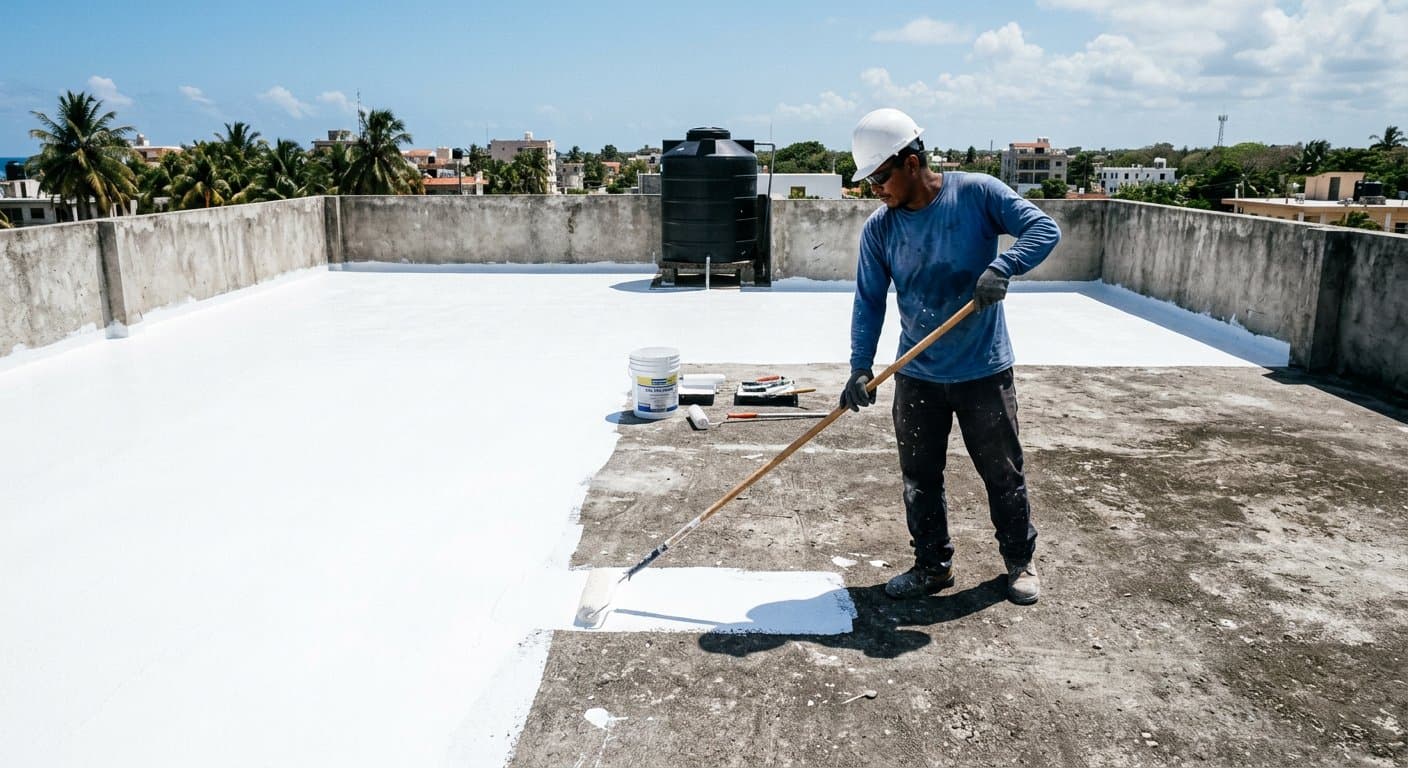
An exposed RCC terrace in Chennai absorbs solar radiation all day and radiates it downward into the rooms below well into the evening. Air conditioning then runs continuously against a ceiling that is actively heating the room. Reducing the heat at the roof is far more effective than fighting it at the air conditioner.
Option 1: solar reflective cool roof coating
A high-SRI white elastomeric coating reflects most incoming solar radiation instead of absorbing it. It is the fastest and least disruptive option — a few days of work, no structural change, and the better elastomeric systems provide a waterproof layer at the same time.
The trade-off is maintenance. Reflectivity drops as dust builds up, so it benefits from periodic cleaning and a recoat every few years to restore full performance.
Option 2: china mosaic
Broken white ceramic set in mortar over a waterproofed base. Traditional in this region for good reason — it is highly reflective, extremely durable underfoot, and the bedding layer adds a degree of thermal mass and an insulating air gap. It lasts fifteen years or more.
It costs more than a coating and adds dead load to the slab, so it needs to be a considered decision rather than a default.
Option 3: insulation above the slab
Insulation board laid over the slab under a protective screed or tiling addresses conduction directly rather than just reflecting radiation. It is the most thermally effective option and also the most expensive and disruptive, and it raises the terrace level — which has implications for door thresholds and drainage.
Option 4: shading
A pergola, shade net or elevated structure stops radiation reaching the slab at all. Very effective, and it makes the terrace usable, but it is a construction project rather than a coating and may need approval depending on your building.
Which to choose
| Priority | Usually the right choice |
|---|---|
| Fast, affordable, terrace also leaks | Reflective elastomeric coating |
| Long life, terrace is walked on | China mosaic |
| Maximum thermal performance | Above-slab insulation |
| Want to use the terrace as space | Shading structure |
What to expect
Reflective treatments bring the terrace surface temperature down substantially under direct sun, and most clients report the rooms below are noticeably more comfortable through the afternoon with air conditioning cycling off rather than running continuously. The exact benefit depends on your slab thickness, existing insulation and how exposed the roof is, so treat any contractor quoting a precise degree figure with some caution.
Frequently asked
Does a cool roof coating also waterproof the terrace?
Elastomeric and membrane-based reflective systems do. A basic reflective paint does not. If the terrace already leaks or has cracking, specify a combined system.
How often does reflective coating need recoating?
It stays effective for several years, though dust accumulation reduces reflectivity over time. Periodic cleaning helps and a recoat restores full performance.
Related services
Terrace Heat Reduction Coating
An untreated Chennai terrace can reach well over 60°C in summer, and that heat radiates straight into the rooms below. A solar-reflective cool roof coating reflects most of that radiation instead of absorbing it — and the better systems waterproof at the same time.
Terrace Waterproofing
Chennai terraces fail for three reasons — dead slope that ponds water, untreated shrinkage cracks, and parapet junctions left open. We correct all three, then lay a mesh-reinforced membrane system sized to how the terrace is actually used.