The most expensive mistake in building repair is fixing the wrong thing. A damp patch on a ceiling is the end of the water's journey, not the beginning, and water travels surprising distances along a slab or inside a shaft before it appears. Thermal imaging is how you find the beginning.
What the camera actually sees
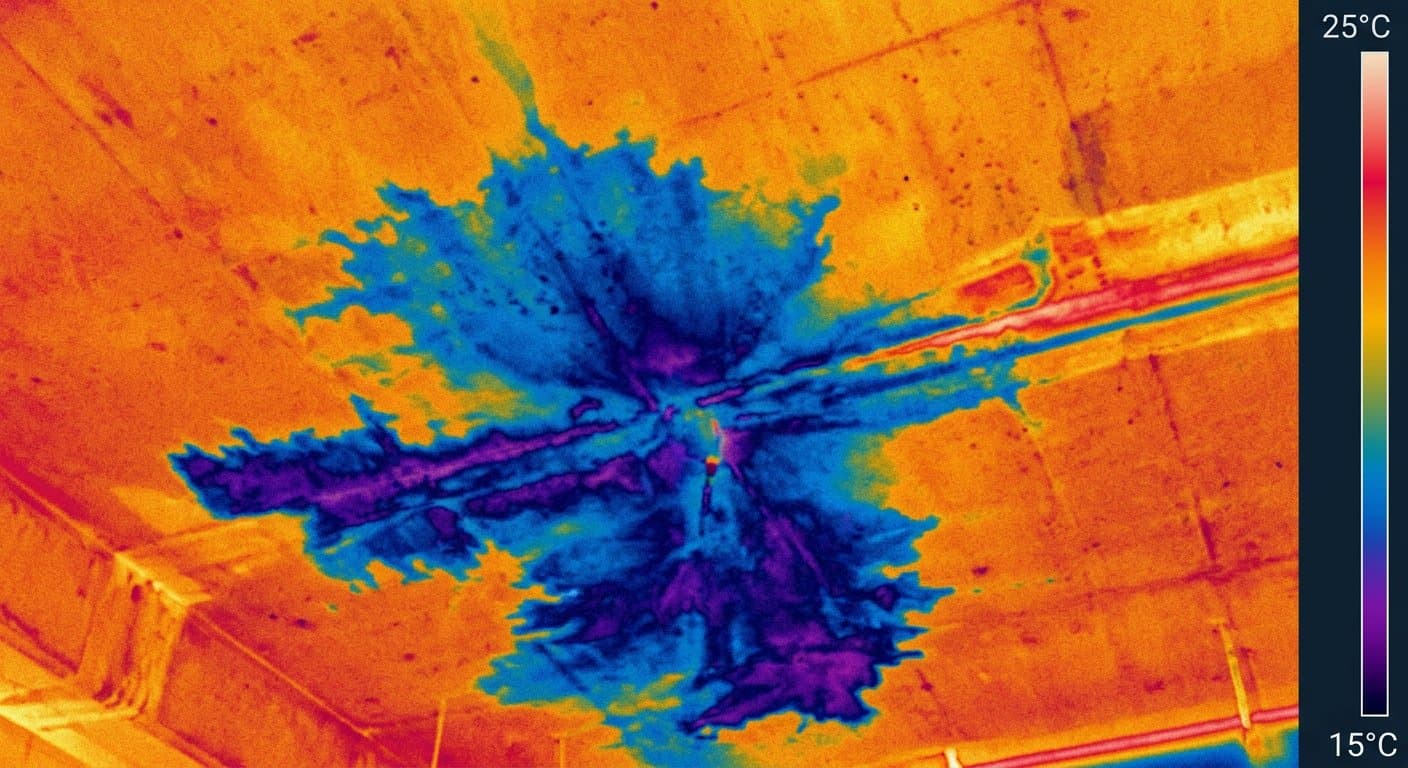
An infrared camera does not see through walls and it does not see water. It reads surface temperature, very precisely. Wet material behaves differently from dry material thermally — it holds more heat, and evaporation cools its surface. So a damp area inside a wall or slab changes the surface temperature above it, and that difference shows up clearly as a distinct shape on the thermal image.
That shape is the useful part. Moisture spreading from a point source produces a characteristic plume, and it points back toward where the water is entering. A concealed hot water pipe leaking behind tiling shows as a warm line with a bloom at the failure point.
What it can find
- The true entry point of a ceiling or wall leak, which is often metres from the visible stain
- Concealed pipeline leaks behind plaster and tiling, hot and cold lines both
- Moisture tracking laterally along a slab
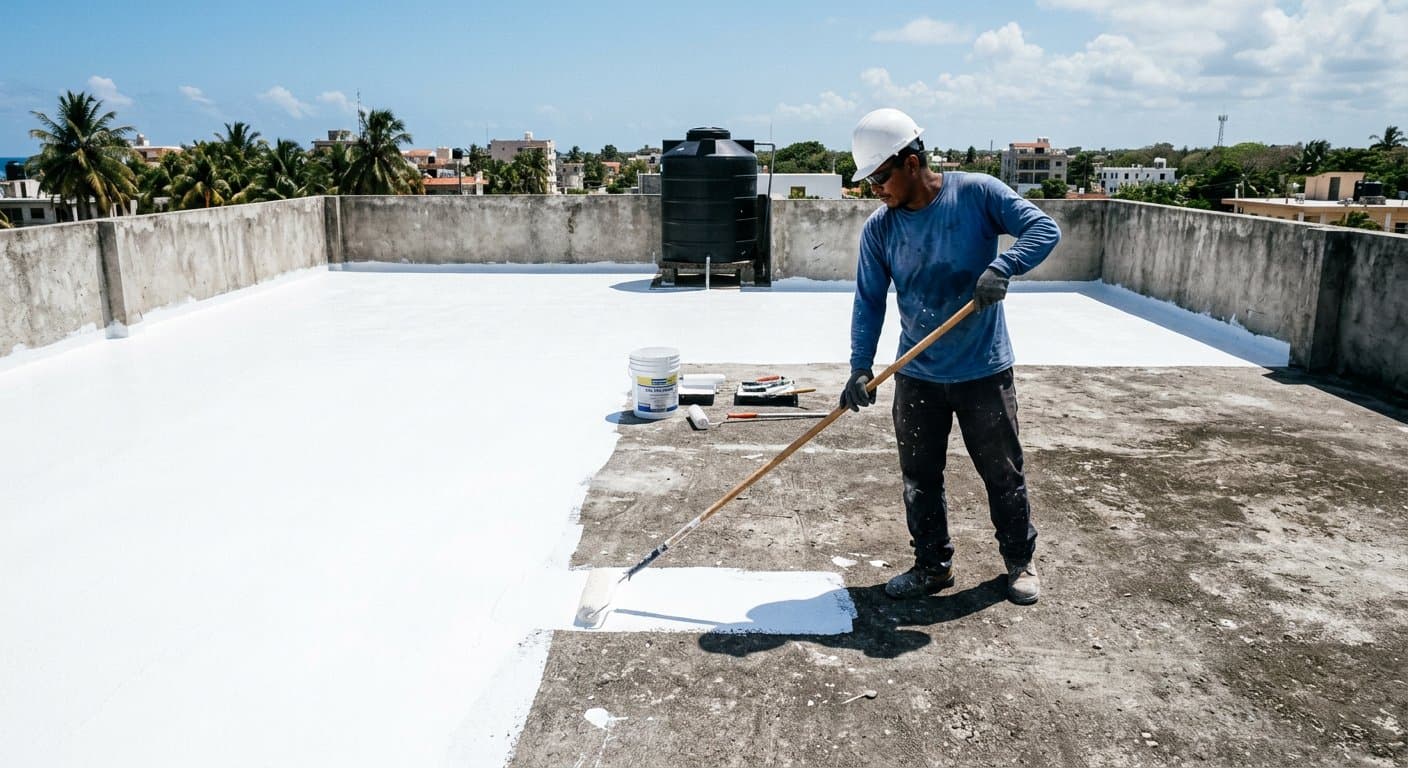
- Terrace ponding and dead slope areas, scanned from above
- Whether a suspected source — say, a bathroom above — is actually dry
- Whether a completed repair has genuinely worked, by rescanning afterwards
What it cannot do
It is worth being straight about the limits. The camera cannot see through a wall to image a pipe. It cannot reliably read a surface in direct sunlight, because solar gain overwhelms the moisture signal. It struggles on surfaces with very different materials side by side, and it needs a temperature differential to work with — which is why survey timing matters.
For this reason we confirm thermal findings with moisture-meter readings at the identified points before recommending any work. The camera narrows it down; the meter confirms it.
When it is worth doing
| Situation | Worth a thermal survey? |
|---|---|
| Leak returned after previous repairs | Yes — the source was probably never found |
| Stain location does not match any obvious source | Yes |
| Quoted for major demolition to investigate | Yes — usually avoids most of it |
| Buying a property, want a moisture check | Yes |
| Obvious single crack, visible water path | Not necessary |
| Whole-building survey for a society | Yes — gives a documented, phased plan |
The verification scan
The less obvious value is at the end. After the repair and a wet test, rescanning the same points gives a direct comparison against the original images. It is the difference between being told the leak is fixed and being shown it. It is also what a meaningful warranty should be written against.
Frequently asked
Is thermal imaging destructive?
No, it is entirely non-destructive. Nothing is drilled, opened or broken during the survey. When repair follows, you typically open one confirmed location instead of several exploratory ones.
How long does a survey take?
A typical apartment or independent house takes two to three hours. Factory and commercial buildings are scoped on site depending on area and access.
Can it detect a leak that is not currently active?
Only if moisture is still present in the structure. A leak that stopped and has fully dried leaves no thermal signature. If a leak is intermittent, we usually survey shortly after rain or after running the suspected line.
Related services
Thermal Imaging Leak Detection
Most waterproofing fails because the contractor treated the stain, not the source. We run a thermal imaging survey first — an infrared camera reads surface temperature differences to reveal where moisture is actually travelling inside your slab or wall. You get a diagnosis report before anyone touches a chisel.
Residential Waterproofing
Homes leak in predictable places — the terrace, the bathroom below it, the balcony threshold, the external wall on the rain-facing side and the sump. We survey the whole building, prioritise by severity, and treat causes in the right order so you are not repainting the same ceiling next year.