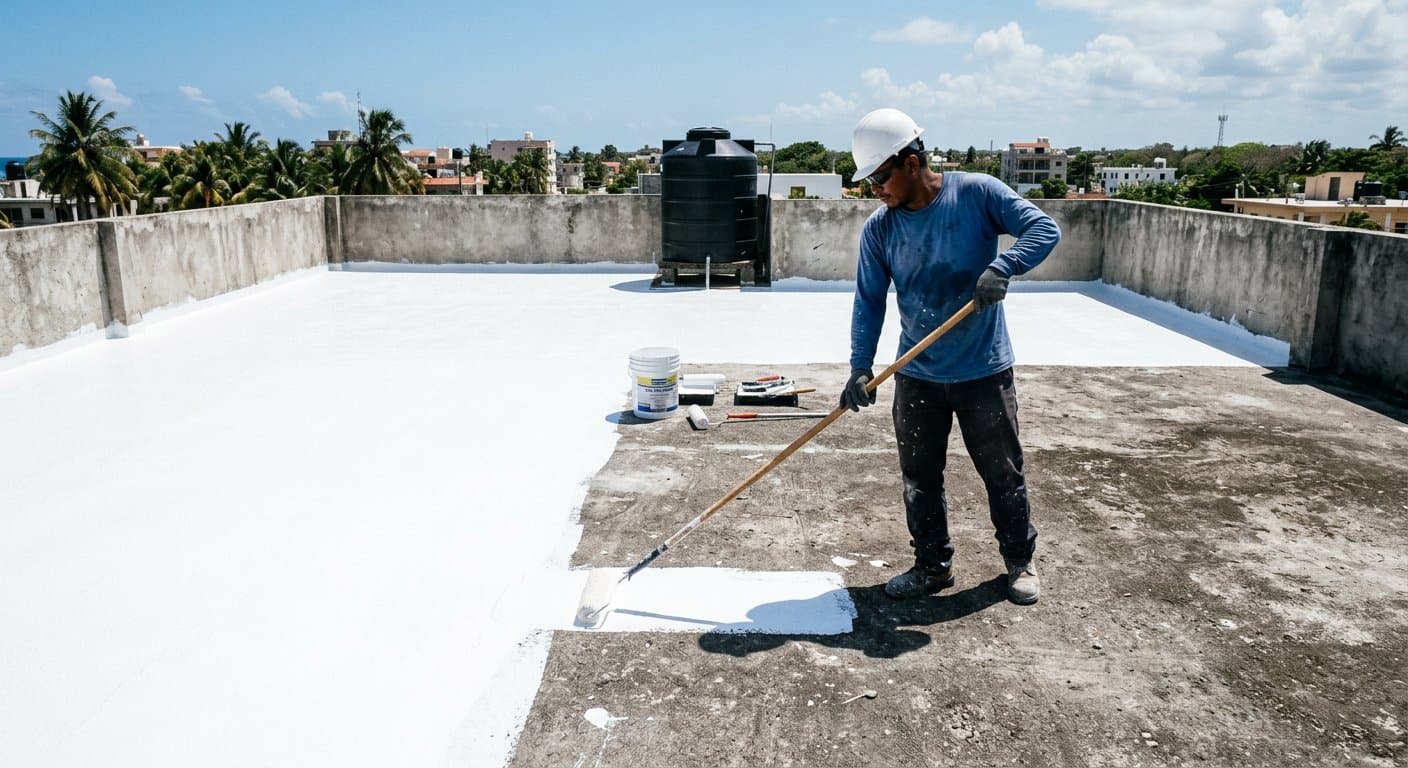
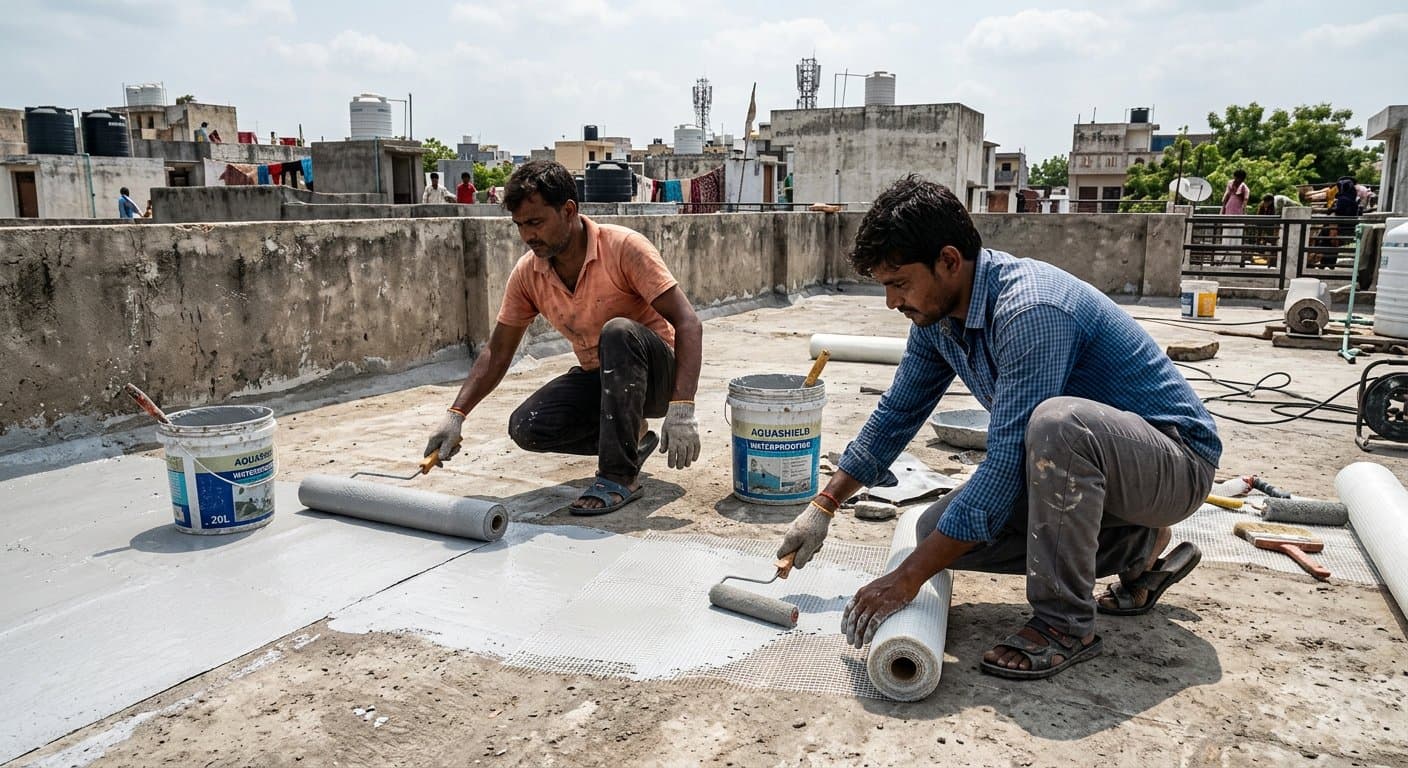
Yes — most terrace leakage during rain can be prevented with a pre-monsoon check. Chennai's northeast monsoon (October–December) delivers the bulk of the year's rain in intense spells, finding every weak spot: clogged drains, hairline cracks, open parapet joints. Fix these nine things before the rains, and your terrace stays dry.
Why the northeast monsoon is Chennai's real waterproofing test
Chennai's rainfall pattern is unusual. According to India Meteorological Department data reported by The Times of India, the city receives about 87 cm of rain during the October–December northeast monsoon — nearly 60% of its entire annual rainfall — with the season typically setting in around mid-October (source).
That matters because monsoon rain doesn't fall gently. It arrives in short, intense spells that pond on flat terraces within minutes. A terrace that survived the summer without a drip can start leaking in the first week of the monsoon — not because something suddenly broke, but because standing water finally found the crack that was there all along.
The 9-point pre-monsoon terrace checklist
Walk your terrace with this list in late September or early October. It takes about 30 minutes.
- **Clear every rainwater outlet.** Leaves, dust, and construction debris choke drain covers over the summer. A blocked outlet turns your terrace into a shallow pond in the first heavy spell — and ponding water is the single fastest way to force seepage through a weak membrane.
- **Look for where water stands.** After the next rain (or a bucket test), watch where water lingers. Areas that stay wet for hours after the rest of the terrace has dried indicate a dead slope. Ponding spots deserve a contractor's attention before the monsoon, because no coating performs well under permanently standing water.
- **Mark every crack, even hairline ones.** Concrete shrinks and moves with Chennai's heat. Walk the full terrace and mark cracks with chalk. Hairline shrinkage cracks are the most common entry points we see — small enough to ignore in summer, wide enough to leak by November.
- **Inspect the parapet wall junctions.** The line where the terrace floor meets the parapet wall is a classic failure point. Look for gaps, crumbling mortar, or old sealant pulling away. Water loves this junction because two surfaces move differently here.
- **Check around every pipe and protrusion.** Drain pipes, dish antenna bases, AC outdoor unit stands, solar heater mounts — every penetration through the terrace surface is a potential leak path. The waterproofing must turn up and seal around each one; if you see gaps or cracked sealant, note it.
- **Assess the existing waterproofing layer.** Look for blisters, bubbles, peeling edges, or areas where the coating has worn thin enough to see the concrete beneath. Blisters mean moisture is already trapped under the layer — a sign the system is failing from below.
- **Scan the external walls on the rain-facing side.** Terrace leaks aren't the only monsoon problem. Wind-driven rain soaks exterior walls, and damp patches that appear on interior walls during heavy rain usually trace back to the outer face. If the exterior paint is chalky, cracked, or peeling, plan for exterior repainting after waterproofing — paint over a damp wall without treating the ingress first will peel again within a season.
- **Run a controlled water test on suspect areas.** For a specific damp patch indoors, have someone pour water in a controlled way on the terrace area directly above while another person watches the ceiling below. If dampness appears within minutes, you've confirmed the path. If nothing appears, the water may be travelling laterally from a parapet or pipe — which brings us to the next point.
- **Get a professional diagnosis for anything you can't trace.** Some leaks defeat the bucket test because water travels sideways inside the slab before dripping metres away from the entry point. A thermal imaging leak detection survey maps exactly where moisture is moving inside the concrete, so repairs target the source instead of the stain. This is the step that prevents paying for the same repair twice.
Already leaking? Match the symptom to the cause
| What you see indoors | Most likely cause | What actually fixes it |
|---|---|---|
| Damp patch appears hours after rain | Hairline crack or pinhole in membrane above | Crack treatment + localised membrane repair |
| Active dripping from one spot | Direct leak path through slab | Targeted repair or injection grouting at the source |
| Dampness spreading over weeks | Water travelling laterally from parapet, pipe, or external wall | Junction sealing + professional survey to trace the path |
| Paint bubbling on the ceiling below | Trapped moisture under a failed coating | Remove failed layer, treat substrate, re-apply system |
| Leak returns every monsoon despite past "repairs" | Previous work treated the stain, not the source | Full diagnosis first — thermal survey, then the right system |
When a visual check isn't enough
A homeowner's checklist catches the obvious problems, which is genuinely useful — but the expensive leaks are rarely obvious. Water can enter at a parapet joint on the east side and appear as a damp patch on a bedroom ceiling on the west side. When the symptom and the source don't line up, guessing gets expensive: every wrong repair is money spent and another monsoon of damage.
This is exactly why professional waterproofing starts with diagnosis. Om Engineering Services runs a thermal imaging leak detection survey before quoting any terrace waterproofing in Chennai — an infrared camera reads surface temperature differences to reveal where moisture is actually travelling inside your slab or wall. You get an annotated report showing the root cause before anyone touches a chisel, and the repair targets that cause.
Frequently asked questions
The bottom line
Most monsoon terrace leaks in Chennai trace back to five predictable weak spots: clogged drains, ponding from dead slope, untreated cracks, open parapet junctions, and a worn-out membrane. A 30-minute pre-monsoon inspection that checks all five — followed by targeted repairs before October — prevents the large majority of rainy-season leakage. And for the leaks you can't trace by eye, diagnose before you repair: find the source with a thermal survey, then fix it once.
Dealing with terrace leakage this monsoon? Om Engineering Services offers free site inspections across Chennai and Avadi. Call +91 99402 67893 or WhatsApp to book a visit before the heavy rains set in.
Frequently asked
When should I waterproof my terrace before the monsoon in Chennai?
Ideally 4–6 weeks before October, so coatings cure fully before the first heavy spell. Most waterproofing systems need a few dry days for surface preparation and curing — once the monsoon sets in, scheduling gets difficult and emergency repairs cost more.
Can waterproofing be done during the rainy season?
It is possible during dry windows between spells, but it is not ideal. Surface preparation — scraping, crack treatment, priming — needs a dry substrate, and fresh coatings should not be rained on before curing. Pre-monsoon work is always the better plan.
How do I know if my terrace needs full waterproofing or just repairs?
If the existing coating is largely intact with one or two localised issues, targeted repairs usually suffice. If you see widespread blistering, peeling, or leaks returning in new spots each year, the system has reached the end of its life and a fresh application is more economical than repeated patch-ups.
What does a pre-monsoon terrace inspection cost in Chennai?
Om Engineering Services offers a free site inspection within Chennai and Avadi — a site visit and assessment at no charge. A detailed thermal imaging survey with a written diagnosis report is charged separately, and that amount is adjusted against the project cost if you award the work to them.