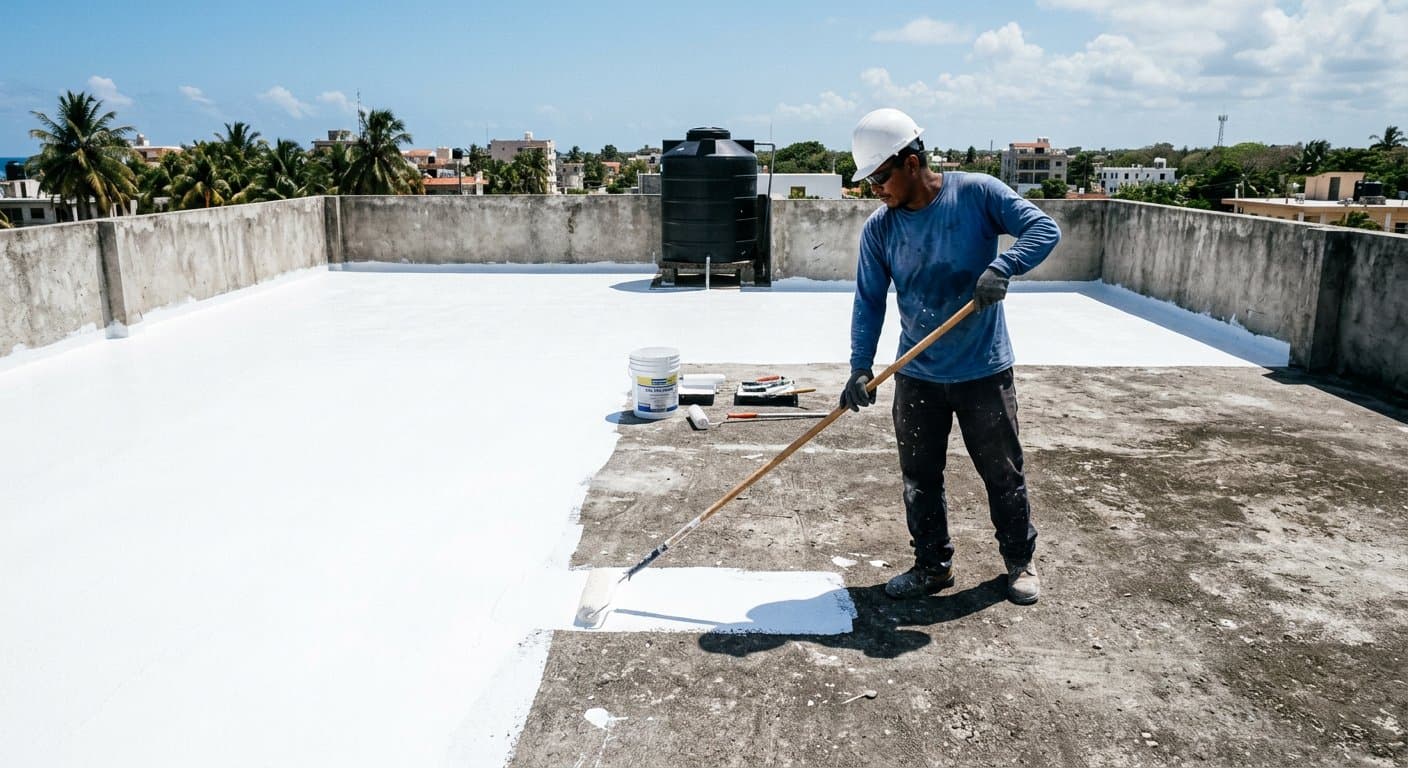
Chennai is genuinely hard on exterior paint — coastal salt, a heavy monsoon and strong UV all shorten coating life. But a properly executed exterior system should still give you five to eight years. When paint fails in two, the environment is not the reason.
Cause 1: painting over loose coating
New paint is only as well attached as whatever is underneath it. If the previous coat is flaking or chalky and the contractor rolls fresh emulsion over it, the new coat bonds to a layer that is already letting go. It looks perfect on handover and peels away in sheets a year or two later, often taking the old coat with it.
Proper preparation means scraping back to a sound substrate everywhere the existing coating is loose, then power washing and allowing the wall to dry fully. On a badly weathered building this can be several days of work with nothing visible to show at the end of it.
Cause 2: painting over a damp wall
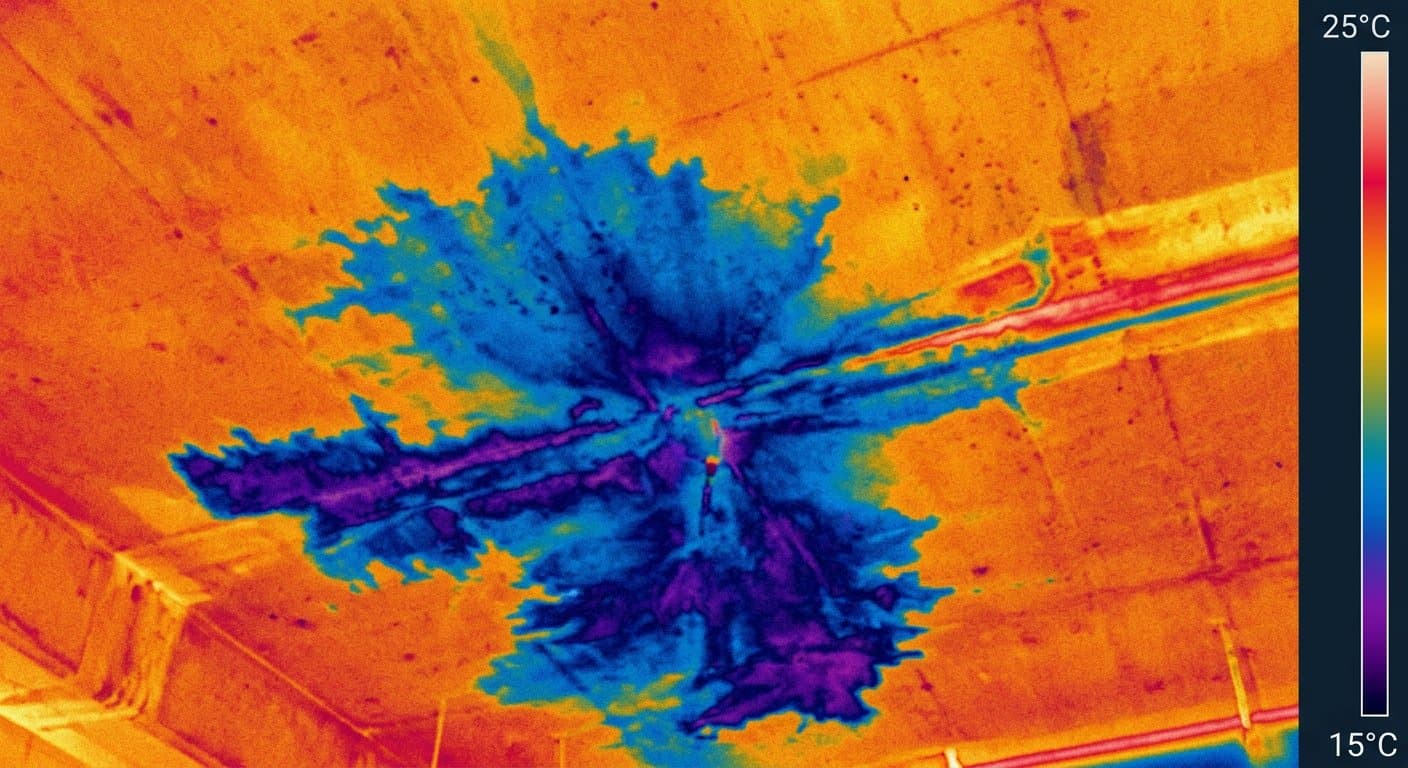
This is the most common cause we find, and the most expensive to ignore. If moisture is entering the wall — from driving rain on a porous elevation, a leaking terrace above, or a concealed pipe — sealing the outside with paint traps it. The moisture then pushes the coating off from behind, producing blisters and peeling that no amount of repainting will fix.
The tell is that failure is localised rather than general: one elevation, or a band at a particular height, or always around the same window. If your paint fails in the same place every time, you have a water problem, not a paint problem.
Cause 3: no primer
Primer is not an upsell. It seals a porous plaster surface so the finish coat forms a proper film instead of soaking in unevenly, and it provides the adhesion layer between substrate and topcoat. Skipping it saves a day and a modest material cost, and it measurably shortens the life of everything applied on top.
The algae question
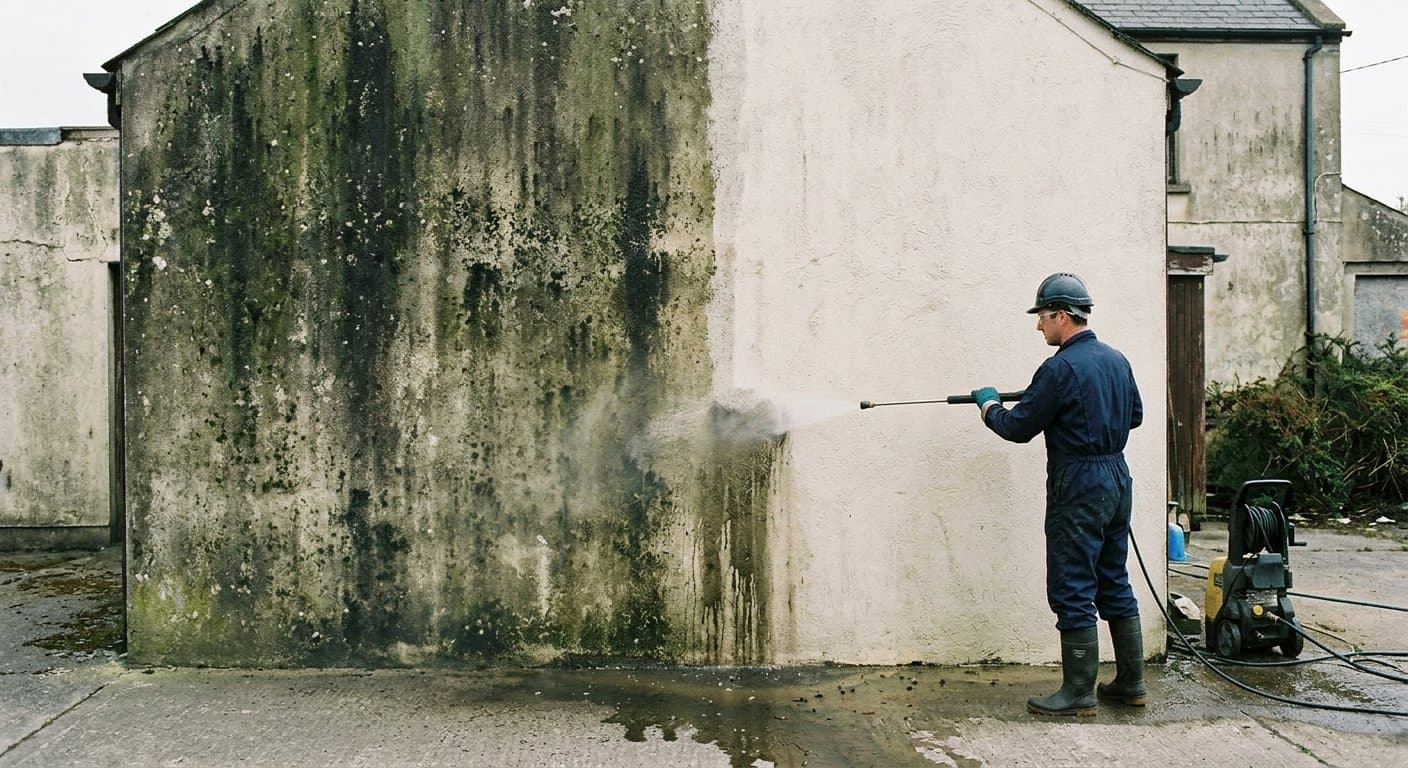
Black and green growth on the shaded, rain-facing side of a building is fungal, and it is feeding on moisture held in the wall. Painting over it does not kill it — it grows back through the new coating, usually within a season. It has to be killed with a biocidal wash first, and ideally the moisture source addressed, or you are repainting the same wall repeatedly.
What good exterior work looks like
- 1Scrape all loose coating back to sound substrate, then power wash
- 2Identify and fix any active moisture source before proceeding
- 3Biocidal treatment on any algal growth
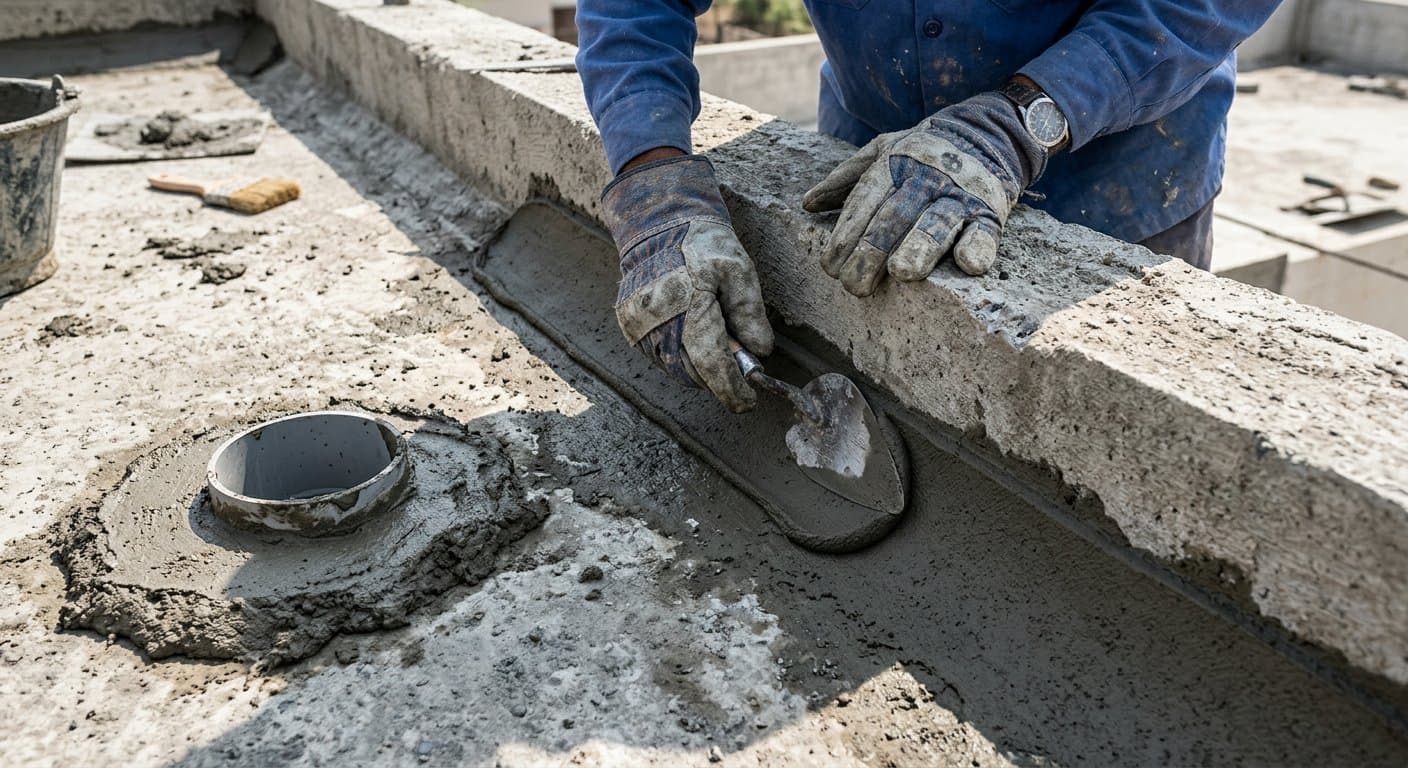
- 4V-groove and fill cracks; remove and re-render hollow plaster
- 5Water-repellent treatment on rain-facing elevations where appropriate
- 6Exterior primer across the full facade
- 7Two finish coats of exterior emulsion at a specified film thickness
Frequently asked
How often should a Chennai building be repainted externally?
With a properly prepared system and a good grade of exterior emulsion, five to eight years. Coastal and heavily rain-exposed elevations sit at the shorter end of that range.
Is expensive paint worth it?
The grade does matter for UV and weather resistance, but preparation matters more. A premium paint over unprepared substrate will fail before an economy paint over properly prepared substrate. Spend on preparation first.
My paint only fails on one side of the building. Why?
That is the signature of a moisture problem rather than a coating problem — usually driving rain being absorbed through porous plaster on the rain-facing elevation. A water-repellent treatment on that side generally solves it.
Related services
Exterior Building Painting
Exterior paint in Chennai has to survive salt air, driving monsoon rain and hard UV. It fails early almost every time because the old coat was painted over instead of removed, or because damp walls were sealed in. We prepare properly, treat the cause of the damp, then apply a weatherproof system.
Building Painting Services in Chennai
Paint fails because the surface preparation failed. We scrape, treat, prime and only then apply — so the finish holds through Chennai monsoons and summers.